
For many people, ovarian reserve testing begins with a question that feels both practical and deeply personal: “What does this mean for my chance of having a baby?” The tests can provide useful information about the number of eggs remaining in the ovaries and how the ovaries may respond to fertility medication. However, they are only one part of the fertility picture, and results deserve calm, expert interpretation rather than rushed conclusions.
Whether you are thinking about trying for a baby, experiencing difficulty conceiving, considering egg freezing or preparing for IVF, understanding what these tests can and cannot show may help you make informed next steps with greater confidence.
When ovarian reserve testing may help
Eggs are stored in small fluid-filled sacs called follicles within the ovaries. A person is born with all the eggs they will have, and the number naturally reduces over time. Ovarian reserve refers broadly to the estimated quantity of eggs and follicles still available.
Testing is often considered when pregnancy has not happened as expected, periods have become irregular, there is a known condition that may affect fertility, or IVF is being discussed. It may also be recommended before treatment that could affect the ovaries, such as certain cancer treatments or ovarian surgery.
Some people choose testing because they are not ready to try for pregnancy yet and want more information about their reproductive health. That is understandable, but it is worth approaching the appointment with realistic expectations. A result cannot tell you exactly how long you have to conceive, guarantee a future pregnancy, or set a deadline for parenthood.
Your age remains one of the strongest indicators of egg quality and fertility potential. Ovarian reserve tests add detail, particularly when a clinician is planning fertility treatment, but they do not replace the wider conversation about your medical history, menstrual cycle, partner factors and reproductive goals.
How ovarian reserve testing is carried out
Assessment commonly combines a blood test with a pelvic ultrasound scan. The tests are straightforward, but their meaning is strongest when they are considered together.
Anti-Müllerian hormone blood test
Anti-Müllerian hormone, usually shortened to AMH, is produced by cells in developing ovarian follicles. AMH levels can offer an indication of the number of small follicles in the ovaries. In general, a higher level may suggest a higher number of remaining follicles, while a lower level may suggest a lower number.
AMH can usually be measured at any point in the menstrual cycle, which makes it convenient for many patients. It is especially helpful in fertility treatment planning because it may indicate how strongly the ovaries could respond to stimulation medication during IVF.
An AMH result is not a test of whether you can conceive naturally this month. Low AMH does not mean pregnancy is impossible, and a high AMH does not guarantee pregnancy. Levels can also vary between laboratories, so results should be interpreted using that laboratory’s reference ranges and alongside your clinical circumstances.
Antral follicle count ultrasound scan
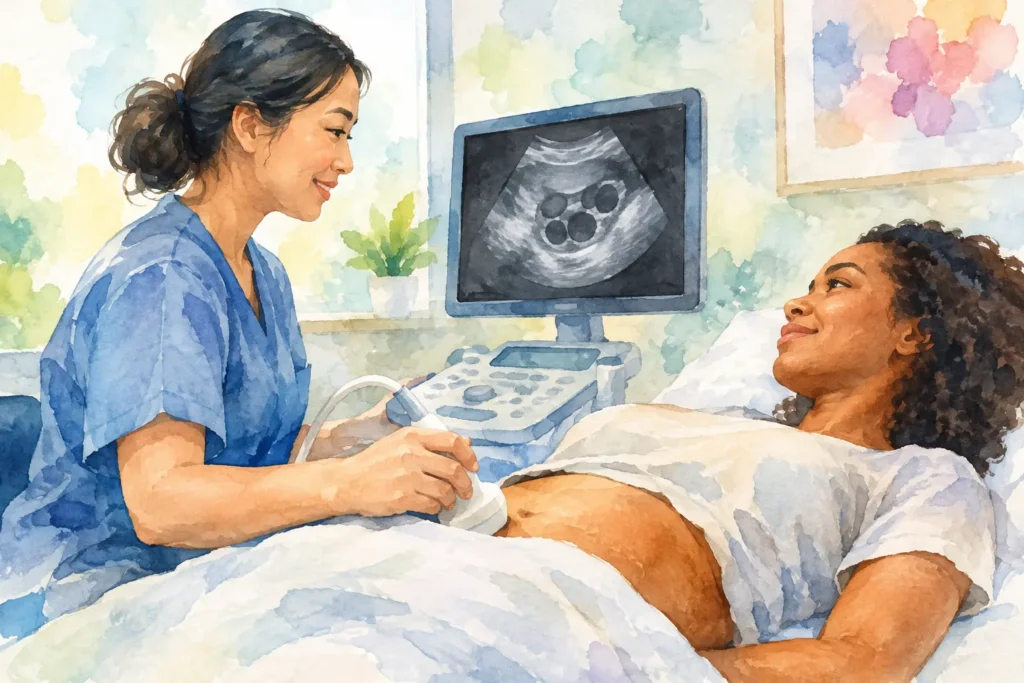
An antral follicle count, or AFC, is measured during an ultrasound scan. The sonographer counts the small follicles visible in each ovary, usually early in the menstrual cycle. These follicles are not individual eggs that can be counted directly, but their number gives a useful estimate of ovarian reserve.
A transvaginal ultrasound generally provides the clearest view of the ovaries and is commonly used for this assessment. It involves a slim ultrasound probe being gently inserted into the vagina and should not be painful, although it can feel slightly uncomfortable for some people. You remain in control throughout and can ask questions or stop the scan at any time.
Where a transvaginal scan is not suitable or preferred, an abdominal scan may sometimes be considered, although the view of the ovaries can be more limited. A qualified sonographer can explain the most appropriate approach and what to expect before your appointment.
The scan may also identify other features relevant to fertility, such as ovarian cysts, fibroids or an appearance consistent with polycystic ovaries. A high follicle count alone does not diagnose PCOS. Diagnosis depends on symptoms, hormone tests and medical assessment as well as scan findings.
Other blood tests your clinician may request
Follicle-stimulating hormone, known as FSH, may be tested early in the menstrual cycle, often alongside oestradiol. A raised FSH level can sometimes suggest that the ovaries need more stimulation to develop an egg. Yet FSH can fluctuate from one cycle to another, which is why it is rarely used alone.
Depending on your symptoms and plans, a clinician may also suggest thyroid testing, prolactin, vitamin levels, or other hormone investigations. If pregnancy is the goal, semen analysis and checking the fallopian tubes may be relevant too. Fertility is shared and multifactorial, so testing only one part of the picture can leave important questions unanswered.
What your results can tell you
The most useful role of ovarian reserve testing is to guide personalised fertility care. For someone preparing for IVF, results can help a fertility specialist estimate likely response to medication and choose an appropriate starting dose. They may also help set realistic expectations about the number of eggs that could be collected in a treatment cycle.
For someone not having treatment, the results can prompt a thoughtful discussion about timing and options. A lower reserve may encourage earlier referral to a fertility specialist, particularly if you are over 35, have been trying to conceive for six months, have irregular periods, or have a history that could affect fertility. If you are under 35 and have been trying for a year, it is also sensible to seek advice.
A result that appears reassuring does not mean there is no reason for concern if you have been struggling to conceive. Conditions such as endometriosis, blocked fallopian tubes, ovulation problems and sperm-related factors can affect pregnancy chances despite a normal AMH level or follicle count.
What the tests cannot predict
This is the part that often brings the greatest reassurance: a test result is information, not a verdict. Ovarian reserve testing does not measure egg quality directly. Egg quality is closely linked to age, and even then, no routine test can assess the quality of every egg in the ovaries.
It cannot reliably predict the chance of natural conception in the short term. Many people with lower AMH conceive without IVF, while people with higher levels may still need support for another reason. Nor can these tests accurately confirm when menopause will begin.
The emotional weight of a number on a report can be considerable. Try not to compare your AMH or follicle count with a friend’s result, an online chart or a social media post. Your age, cycle pattern, health history, medication and family plans all shape what the result means for you.
Preparing for your appointment
Before testing, make a note of the first day of your most recent period, any changes to your cycle, medications and previous pregnancies or fertility treatment. Let the clinician know if you use hormonal contraception, as this can influence the interpretation of some results. Bring any past scan reports or blood test results if you have them.
It can also help to prepare the questions that matter most to you. You may want to ask whether your result is expected for your age, whether further tests are advisable, and whether a referral to a fertility specialist would be helpful. Clear answers can make a sensitive process feel more manageable.
At Miracle Scan, reproductive health ultrasound appointments are carried out in a professional, supportive setting, with the aim of giving you clear imaging and a more comfortable experience when you need answers.
If you are considering testing, choose a service that explains the process clearly and ensures results are reviewed in the context of your individual health. The most valuable outcome is not simply a figure on a page, but a compassionate conversation that helps you decide what feels right for your next step.