
Irregular periods, persistent acne, unwanted facial hair or difficulty conceiving can leave you with more questions than answers. PCOS diagnostic testing brings the right pieces together, so your symptoms can be assessed in context rather than explained away as something you simply have to live with.
Polycystic ovary syndrome, often called PCOS, is common, but it does not look the same in every person. Some women have very irregular periods and clear hormone changes; others have regular cycles but struggle with excess hair growth, acne or fertility. A careful assessment can provide reassurance, identify other possible causes and help you move towards treatment that suits your plans and priorities.
What does PCOS diagnostic testing involve?
There is no single test that can confirm PCOS on its own. Diagnosis is usually based on a combination of your medical history, symptoms, hormone blood tests and, where appropriate, a pelvic ultrasound scan.
Healthcare professionals commonly use the Rotterdam criteria. Under this approach, PCOS may be diagnosed when two of the following three features are present, once other conditions have been excluded: infrequent or absent ovulation, signs or blood-test evidence of higher androgen hormones, and polycystic ovarian morphology on ultrasound.
This is why a scan showing multiple follicles does not automatically mean you have PCOS. Equally, you can have PCOS without a polycystic appearance on your ovaries. Your cycle pattern, symptoms and blood results all matter.
Your symptoms and cycle history
Your appointment should begin with a conversation about your periods, skin, hair growth, weight changes, mood and fertility plans. A clinician may ask when your symptoms began, whether your cycles are predictable and whether you have used hormonal contraception recently.
Ovulation may be less frequent in PCOS, which can lead to periods that are widely spaced, very unpredictable or absent for several months. However, irregular bleeding can also have other causes. Sharing a clear picture of your usual cycle helps the clinician decide which tests will be most useful.
Signs of raised androgens, sometimes described as male-type hormones, can include coarse hair growth on the face, chest or abdomen, acne, oily skin or scalp hair thinning. These symptoms can be distressing, but they are valid medical concerns and deserve a sensitive, unhurried discussion.
Blood tests for suspected PCOS
Blood testing helps assess hormone levels and rules out conditions that can produce similar symptoms. The exact panel varies from person to person, so it is best guided by a qualified healthcare professional rather than treating a standard PCOS blood test as a final answer.
Tests may include testosterone and sex hormone-binding globulin, which can help assess androgen activity. Depending on your history, your clinician may also request thyroid function tests, prolactin and 17-hydroxyprogesterone. These can help exclude thyroid disorders, raised prolactin and less common hormone conditions that may affect periods, fertility or hair growth.
Metabolic health is another important part of the picture. PCOS can be associated with a greater likelihood of insulin resistance, raised blood sugar, cholesterol changes and high blood pressure. HbA1c, glucose and lipid tests may therefore be recommended, particularly if you have a family history of diabetes, have gained weight unexpectedly or are planning a pregnancy.
Timing can matter for certain hormone tests. Hormonal contraception, including the combined pill, can affect results and alter the appearance of the ovaries. Do not stop prescribed contraception simply to arrange testing. A clinician can advise whether your results can be interpreted while you are taking it or whether a different plan is appropriate.
The role of ultrasound in PCOS diagnostic testing
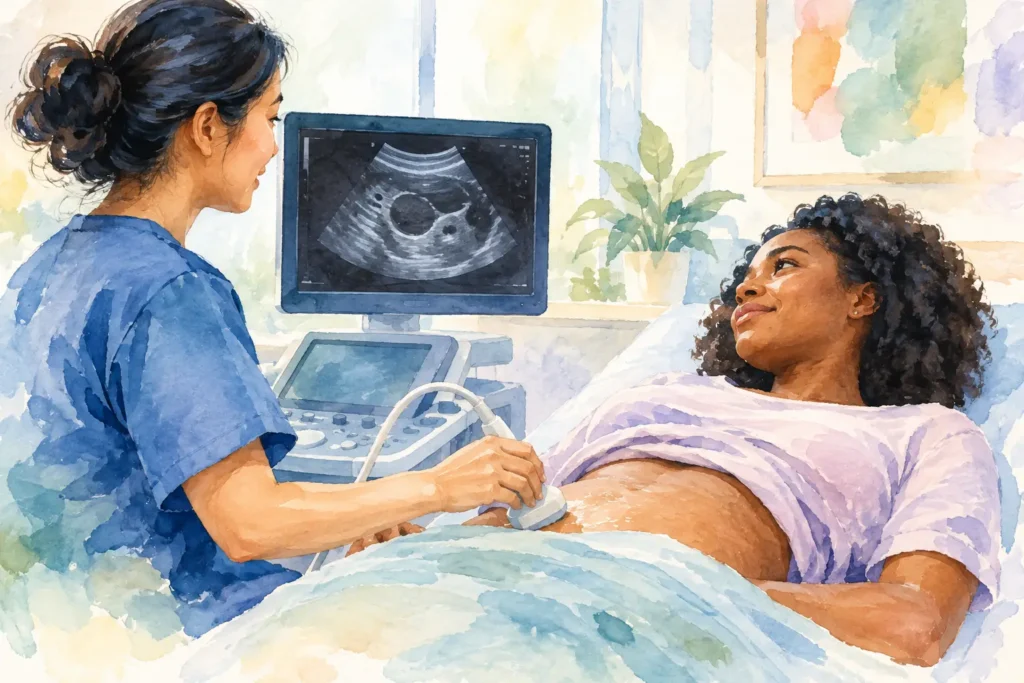
A pelvic ultrasound allows the ovaries and uterus to be assessed in detail. The scan can look for a pattern known as polycystic ovarian morphology, which means there may be a higher number of small follicles and/or increased ovarian volume.
Despite the name, these are not usually harmful cysts. Follicles are small fluid-filled structures that contain developing eggs. Seeing many follicles does not mean your ovaries are damaged, and it does not tell us whether you will or will not be able to become pregnant.
For many adults, a transvaginal ultrasound gives the clearest view of the ovaries. It is an internal scan using a slim, covered probe and is performed with your consent, privacy and comfort prioritised throughout. If an internal scan is not suitable for you, a transabdominal scan over the lower tummy may be offered, although the images may be less detailed.
Ultrasound is particularly helpful when symptoms are unclear, when pelvic pain or unusual bleeding needs investigating, or when a clinician wants to assess the uterus as well as the ovaries. It may also identify findings unrelated to PCOS, such as fibroids or ovarian cysts, which could require a different care plan.
At Miracle Scan, diagnostic ultrasound and blood testing can offer a convenient, supportive starting point for people seeking clarity about reproductive health symptoms. Any scan findings should be considered alongside your history and blood results by the clinician overseeing your care.
What your results may mean
Results are most useful when they are interpreted as a whole. If you meet the criteria for PCOS, the next conversation should focus on what matters to you now. Your care may look different if you are hoping to conceive, trying to make periods more regular, managing acne and excess hair growth, or protecting your longer-term metabolic health.
If your tests do not point to PCOS, that is still valuable information. It can direct attention towards other causes of irregular periods or androgen-related symptoms, and prevent you from following advice that does not fit your situation.
A PCOS diagnosis is not a judgement about your lifestyle, nor does it define your fertility. Many people with PCOS conceive, sometimes without treatment and sometimes with support to help ovulation. The right pathway depends on factors including your age, cycle pattern, partner factors, medical history and how long you have been trying for a pregnancy.
Preparing for your appointment
Bring a note of your recent period dates, current medicines and supplements, and any previous blood or scan reports if you have them. It can also help to write down the symptoms you want to discuss, especially if they have changed gradually over time.
Ask whether you need to fast before blood tests and whether your appointment should be booked for a particular stage of your cycle. For a pelvic ultrasound, the preparation depends on the type of scan. A transabdominal scan often requires a comfortably full bladder, while an internal scan usually requires an empty bladder.
You are entitled to ask what each test is checking, how and when results will be shared, and what happens if further assessment is needed. Clear communication is part of good care, particularly when you are managing symptoms that may have affected your confidence or fertility hopes.
When to seek more urgent advice
PCOS symptoms can usually be investigated through a planned appointment, but some symptoms need more urgent assessment. Seek prompt medical advice if you have severe or sudden pelvic pain, very heavy bleeding, dizziness or fainting, a positive pregnancy test with pain or bleeding, or new symptoms that are rapidly worsening.
If your periods are absent for several months and you are not pregnant, arrange a review rather than waiting for symptoms to settle on their own. Long gaps between periods can affect the lining of the womb, and a clinician can advise on the safest way to manage this.
Getting answers can feel like a major step, especially when your symptoms have been dismissed or have quietly affected your everyday life. A thoughtful assessment gives you a clearer basis for decisions, whether your next priority is cycle care, fertility planning or simply feeling more like yourself again.